

Online Collection
« Prev - 1 of 1 results - Next »
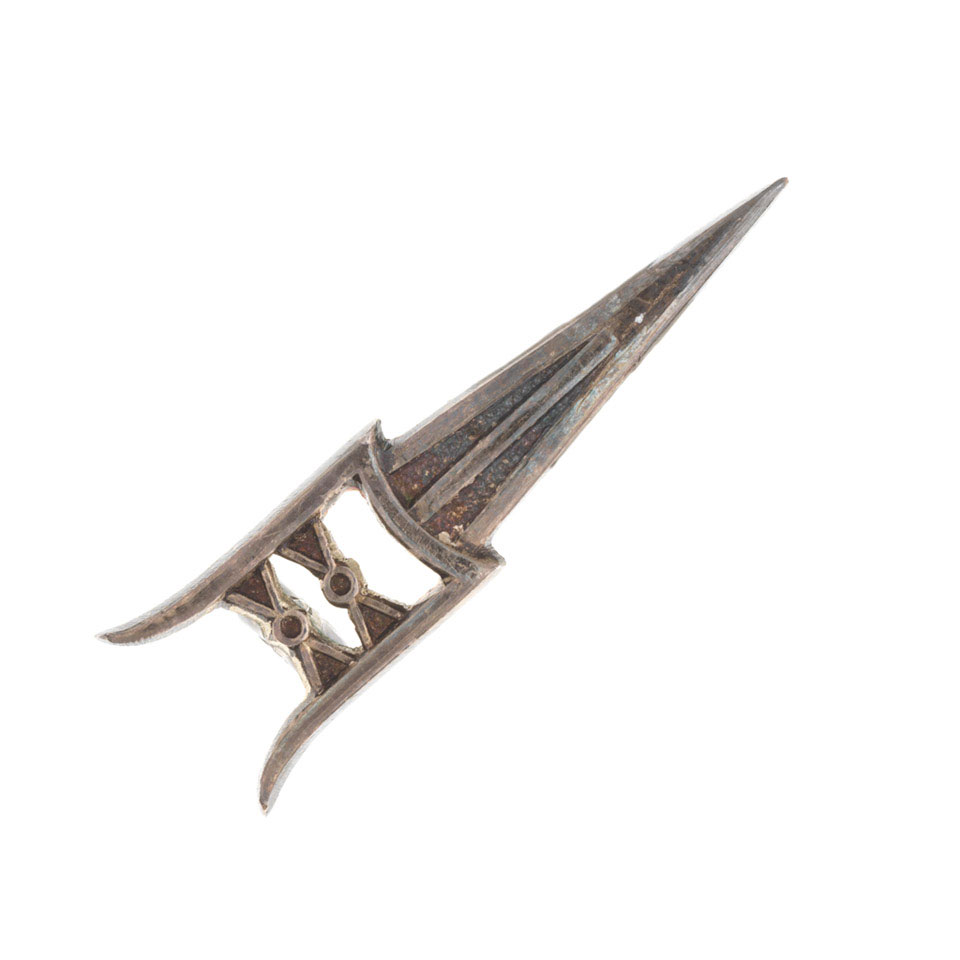
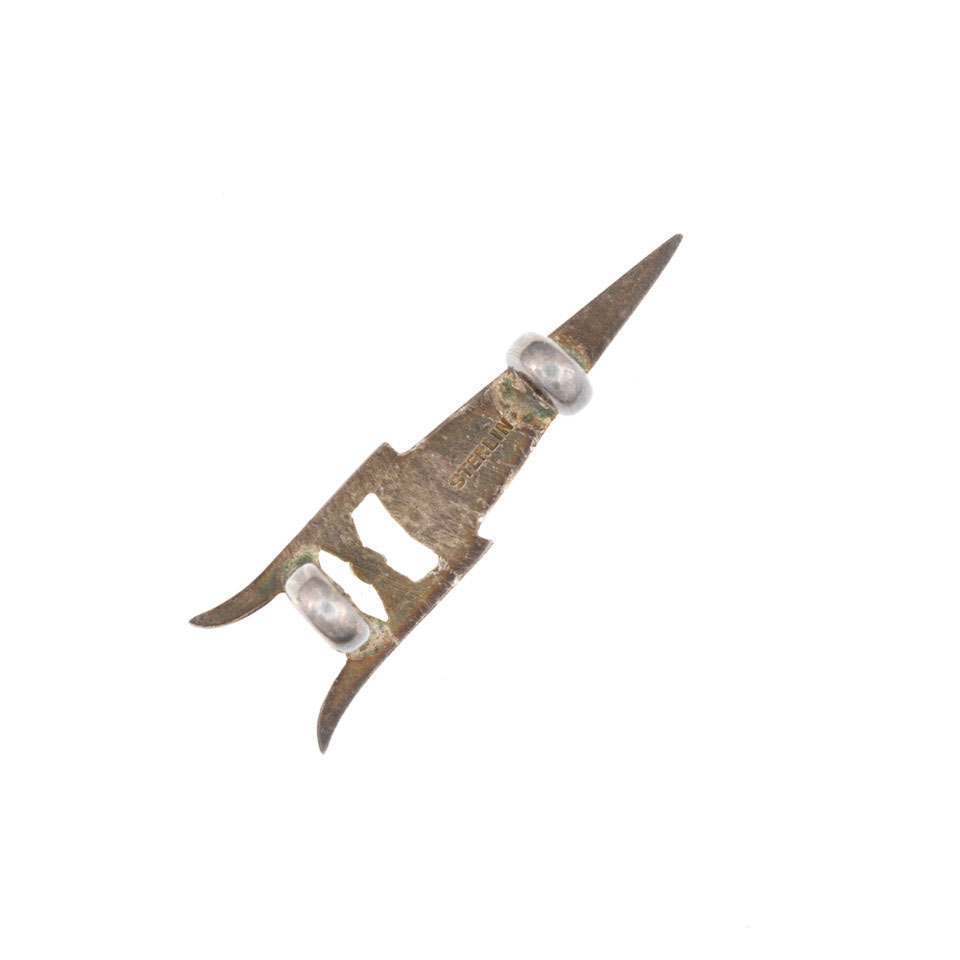
Collar badge, officer, 7th Rajput Regiment, 1922-1947
Sterling silver badge in the form of a katar (push dagger).
The 7th Bengal Native Infantry was originally raised as the 1st Battalion, 24th Native Infantry in 1804. In 1824 it became the 69th Regiment of Bengal Native Infantry and the 47th Regiment of Bengal Native Infantry in 1828. The regiment gained four battle honours during the 1st Sikh War (1845-1846). The unit served in China in 1858-1859 and, renamed the 7th Bengal Native Infantry in 1861, in Egypt in 1882.
In 1883 the regiment became the 7th (Duke of Connaught's) Own Bengal Native Infantry and it was renamed the 7th (Duke of Connaught's Own Rajputs) Regiment of Bengal Infantry in 1893. The unit participated in the 3rd China War (Boxer Rebellion) in 1900. During World War One the regiment was deployed to Mesopotamia in 1914. As part of the garrison of Kut the men of the regiment, as prisoners of war, suffered greatly after the town fell to the Turks in 1916.
With the reorganisation of the Indian Army in 1922 the regiment formed the 3rd Battalion of the new 7th Rajput Regiment, part of an amalgamation with several other units. Partition in 1947 resulted in the regiment becoming part of the Indian Army.
Katars are 'push daggers' from the Indian sub-continent. They are usually formed of a triangular blade with an 'H'-shaped hilt. The weapon is designed to pierce using a punching motion rather than to stab. These traditional weapons were popular trophies or souvenirs for British units and soldiers returning home.
From the Field Marshal Sir John Chapple Indian Army Collection.
NAM Accession Number
NAM. 2013-10-20-33-148
Copyright/Ownership
National Army Museum Copyright
Location
National Army Museum, Study collection
Object URL
https://collection.nam.ac.uk/detail.php?acc=2013-10-20-33-148