

Online Collection
« Prev - 1 of 1 results - Next »
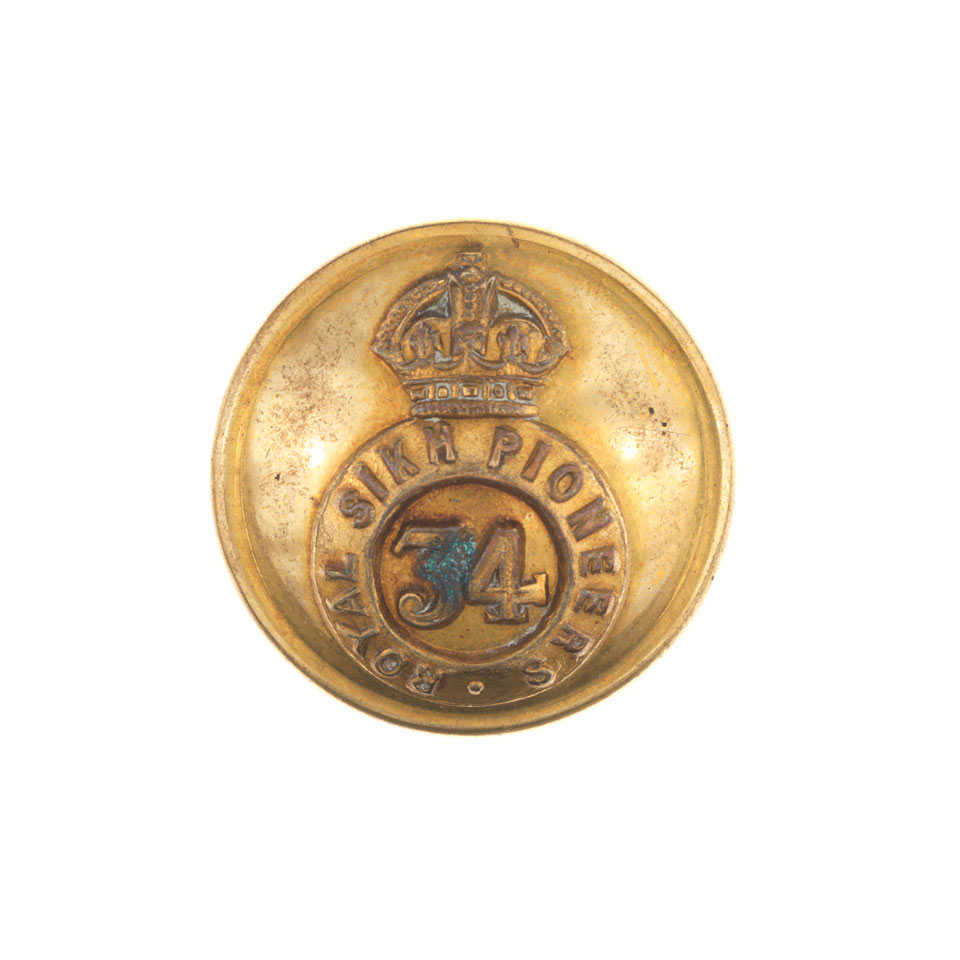
Button, 34th Royal Sikh Pioneers, 1921-1922
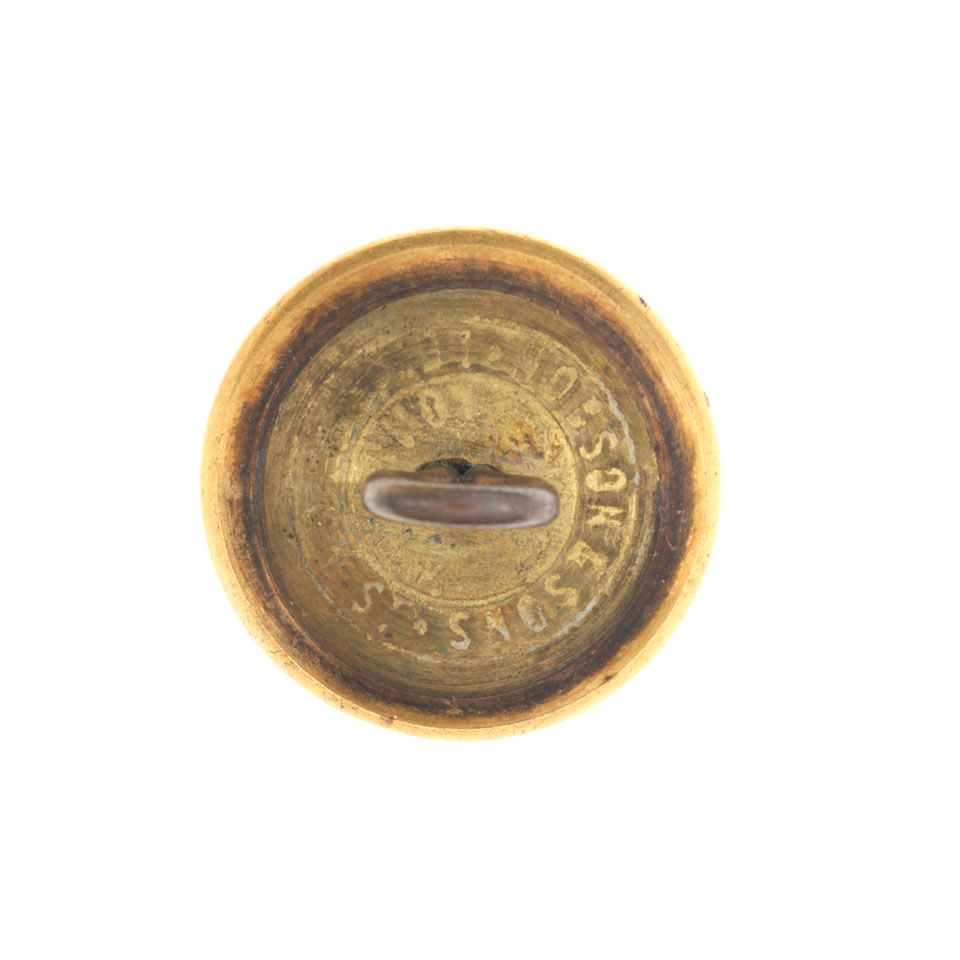
Circular, medium brass button made by Hobson and Sons, Lexington Street, London, with the regimental number, '34', within a quoit, surmounted by an Imperial Crown.
Quoits, or chakram, are a traditional edged weapon from the Indian subcontinent, particularly associated with Sikh fighters. They take the form of a flattened metal ring of varying circumference, with a sharpened outer edge, which can be thrown or used in hand-to-hand combat.
The 34th Sikh Pioneers originated as the Punjab Sappers, raised in the Punjab, in 1857. The unit fought in the Indian Mutiny (1857-1859) subsequently becoming the 24th (Pioneer) Regiment of Punjab Infantry. Renumbered the 32nd Bengal Native Infantry in 1861, the regiment became the 32nd (Punjab) Bengal Native Infantry (Pioneers) in 1864.
The Regiment served in the 2nd Afghan War (1878-1880) and the Chitral Expedition (1895). In 1903, the 32nd Punjab Pioneers became the 34th Sikh Pioneers. The Regiment went on to serve on the Western Front, in Mesopotamia and in Palestine during World War One (1914-1918). Rewarded for its service in the Great War the Regiment became 'Royal' in 1921. As part of the reforms of 1922, the unit became the 2nd Battalion, 3rd Sikh Pioneers.
From the Field Marshal Sir John Chapple Indian Army Collection.
NAM Accession Number
NAM. 2013-10-20-53-355
Copyright/Ownership
National Army Museum Copyright
Location
National Army Museum, Study collection
Object URL
https://collection.nam.ac.uk/detail.php?acc=2013-10-20-53-355